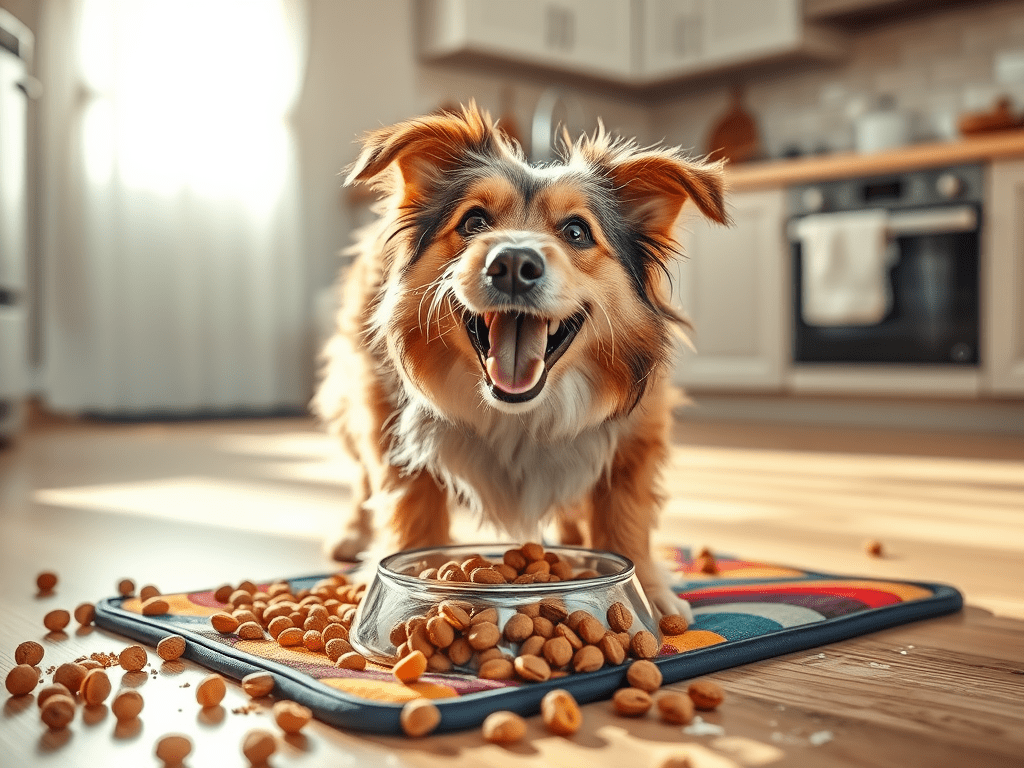
Real talk from a dog mom who learned this lesson the hard way.
There I was, on my hands and knees at 11 PM, scrubbing mystery kibble mush out of the grout lines on my kitchen floor again, while my dog stared at me like I was the weird one. That’s when I realized: I’m not living my best life, and neither is my floor.
Enter the feeding mat – a purchase I initially thought was “extra” and “unnecessary” and “just another thing pet companies want me to buy.”
Spoiler alert: I was wrong. So, so wrong.
If you have a dog (or cat, or any pet that eats like a tiny chaos agent), let me tell you why a feeding mat isn’t just nice to have – it’s a game-changer that’ll make you wonder how you ever lived without one.
The Mess Factor: Let’s Not Pretend Our Pets Are Dainty Eaters
My dog eats like he’s in a competitive sport. Like someone’s going to steal his food if he doesn’t finish in under 30 seconds. He’s enthusiastic. He’s passionate. He’s also incredibly messy.
What happens without a feeding mat:
- Kibble gets flung in a 3-foot radius (how?? physics??)
- Water splashes everywhere when he drinks like he’s been stranded in the desert
- Food particles grind into your floor, creating this weird sticky film
- You step in a wet spot in socks (if you know, you know – it’s a betrayal every time)
What happens WITH a feeding mat:
- Everything lands on the mat
- The raised edges contain the chaos
- You shake it off outside or rinse it in the sink
- Your floor stays clean
- Your sanity stays intact
Is it still messy? Sure. But it’s contained messy. That’s the dream.
Your Floors Will Thank You (Seriously, They’re Suffering)
Let’s talk about what’s actually happening to your floors when your pet eats without a mat.
Hardwood floors: Water and food create moisture that seeps into the wood. Over time, this causes warping, discoloration, and damage. That dark ring around where the water bowl sits? Yeah, that’s permanent wood damage. Ask me how I know. (Spoiler: I learned the expensive way.)
Tile and grout: Food and water get into grout lines and create stains that are nearly impossible to clean. The grout becomes discolored, grows mildew, and basically becomes a science experiment you didn’t sign up for.
Laminate and vinyl: Water can seep into the seams and cause bubbling, peeling, and warping. Once moisture gets under there, you’re looking at replacing entire sections.
Carpet: Oh, sweet summer child with carpet in your feeding area. You’re brave. Food particles, water, and pet saliva create stains and odors that embed deep into the fibers. Even if it looks clean, it probably smells.
A feeding mat acts as a barrier. It’s literally protection for your flooring investment. When you think about it that way, a $15-30 mat seems like a pretty smart insurance policy.
The Bacteria Situation (It’s Not Cute)
Here’s something I wish I didn’t know but can’t unknow: the area around pet food bowls can harbor some gnarly bacteria.
What’s lurking: When food and water sit on your floor, they create moisture. Add in food particles, maybe some drool, a bit of dust, and you’ve created a bacteria playground. We’re talking E. coli, Salmonella, and other friends you definitely don’t want at your house party.
Why this matters: You walk through this area. Your pet walks through it. Then your pet licks their paws. You touch your pet. See where this is going? Cross-contamination is real.
How a feeding mat helps: Most feeding mats are made from materials that are:
- Non-porous (bacteria can’t penetrate)
- Easy to clean (spray down, wipe, done)
- Food-safe and BPA-free
- Machine washable or dishwasher safe (depending on the type)
You can regularly clean the mat, which you definitely weren’t regularly deep-cleaning your floor around the bowls. Be honest.
The Sound Factor (Your Downstairs Neighbors Care About This)
If you have a dog who picks up their metal bowl and drops it repeatedly while eating (why do they do this?? what is the evolutionary purpose??), you know the sound.
CLANG. CLANG. SCRAPE. CLANG.
It’s like living with a tiny, furry construction crew.
Feeding mats dampen this noise. The bowl sits on a cushioned surface instead of directly on hard flooring. The difference is significant. Your ears will thank you. Your neighbors will thank you. Your sanity will thank you.
Plus, mats with raised edges or built-in bowl holders prevent the bowl from sliding around while your pet eats. No more chasing the bowl across the kitchen floor. Game-changer.
Types of Feeding Mats (Because Yes, There Are Options)
Not all mats are created equal. Here’s the breakdown:
Silicone Mats
- Pros: Flexible, easy to clean, dishwasher safe, non-slip, raised edges contain spills
- Cons: Can be pricey, some dogs try to chew them
- Best for: Most households, especially if you want low-maintenance cleaning
Rubber Mats
- Pros: Durable, heavy-duty, stays in place, affordable
- Cons: Can have a rubber smell initially, heavier to move
- Best for: Large dogs, messy eaters, high-traffic areas
Microfiber/Fabric Mats
- Pros: Super absorbent, machine washable, soft on paws, lots of cute designs
- Cons: Can hold odors if not washed regularly, takes time to dry
- Best for: Pets who splash water more than scatter food, aesthetic matchers
PVC/Plastic Mats
- Pros: Cheapest option, easy to find, wipeable
- Cons: Can crack over time, not as durable, can slide around
- Best for: Budget-conscious pet parents, trying out the concept
Elevated/Integrated Mats
- Pros: Has built-in bowl holders, super stable, everything stays in place
- Cons: More expensive, takes up more space, can’t use your own bowls
- Best for: Pet parents who want an all-in-one solution
My recommendation? Start with a silicone mat with raised edges. It’s the sweet spot of functionality, durability, and ease of cleaning.
The Unexpected Benefits I Didn’t See Coming
Benefit #1: It defines the feeding space My dog now knows exactly where mealtime happens. He goes to his mat and waits. It created a boundary that actually helped with training and routine.
Benefit #2: Travel-friendly Got a silicone mat? Roll it up and take it anywhere. Hotel room, friend’s house, camping trip – instant clean feeding station. Your hosts will appreciate not having pet food on their floors.
Benefit #3: Multi-pet households If you have multiple pets, individual mats create separation during feeding time. Less food aggression, clear boundaries, everyone has their own space.
Benefit #4: Protects against ants Some feeding mats (especially silicone ones with raised edges) create a barrier that makes it harder for ants to reach the food. Not foolproof, but definitely helpful.
Benefit #5: Easier portion control visibility When kibble scatters everywhere, you can’t tell if your pet actually ate or just redecorated. With a mat, you can see exactly what was eaten vs. what was played with.
Benefit #6: Less bending and scrubbing Instead of getting on your hands and knees to scrub the floor, you just pick up the mat and clean it. My back appreciates this more than I expected.
How to Choose the Right Mat for Your Pet
Consider your pet’s eating style:
- Enthusiastic/messy eater: Get a mat with high raised edges (at least 1 inch)
- Water splasher: Look for absorbent materials or deep edges
- Bowl pusher: Find one with non-slip backing or bowl holders
- Neat eater: Any basic mat will do
Consider your space:
- Small kitchen: Go for a compact mat that fits the space
- High-traffic area: Choose durable, non-slip options
- Carpeted area: Get something waterproof with maximum absorption
- Visible location: Pick a design/color that doesn’t clash (yes, aesthetics matter)
Consider your cleaning style:
- Low maintenance: Silicone or rubber you can rinse
- Deep clean fan: Machine-washable fabric
- Lazy (no judgment): Disposable or super easy wipe-down options
Real Talk: The Downsides
Let’s be honest – nothing’s perfect.
Potential cons:
- Some pets try to eat/chew the mat (especially puppies)
- Fabric mats can develop odors if not washed regularly
- You have to remember to actually clean it (shocking, I know)
- Takes up floor space
- Adds one more thing to your pet care routine
But here’s the thing: Even with these minor inconveniences, the trade-off is worth it. Cleaning a mat once a week beats scrubbing your floor daily. Math checks out.
The Bottom Line (From One Dog Mom to Another)
I spent years mopping around food bowls, dealing with stained floors, and stepping in mystery puddles. Then I spent $20 on a feeding mat and wondered why I’d been living like that.
It’s not glamorous. It’s not exciting. You’re not going to post aesthetic photos of your pet’s feeding mat (okay, maybe you will if it’s cute enough). But it’s one of those small changes that makes daily life noticeably better.
Your floors will last longer. Your cleaning routine gets easier. Your pet has a designated eating space. You stop muttering curse words while scrubbing at 11 PM.
Is it necessary? Technically no. Will it improve your life? Absolutely yes.
So this is your sign. Go get a feeding mat. Your future self (and your floors, and your back, and your sanity) will thank you.
Trust me – I’m living proof that sometimes the smallest upgrades make the biggest difference.
Now if you’ll excuse me, it’s dinner time, and my dog is staring at his mat like I’m personally withholding food for dramatic effect. Because I am. He’s too cute not to make wait an extra 30 seconds.
Do you use a feeding mat? What type? Or are you team “just clean the floor more often”? Drop your pet feeding situation in the comments – I want to know if I’m the only one who’s been doing this wrong for years.

 Salt + Cedar Collective