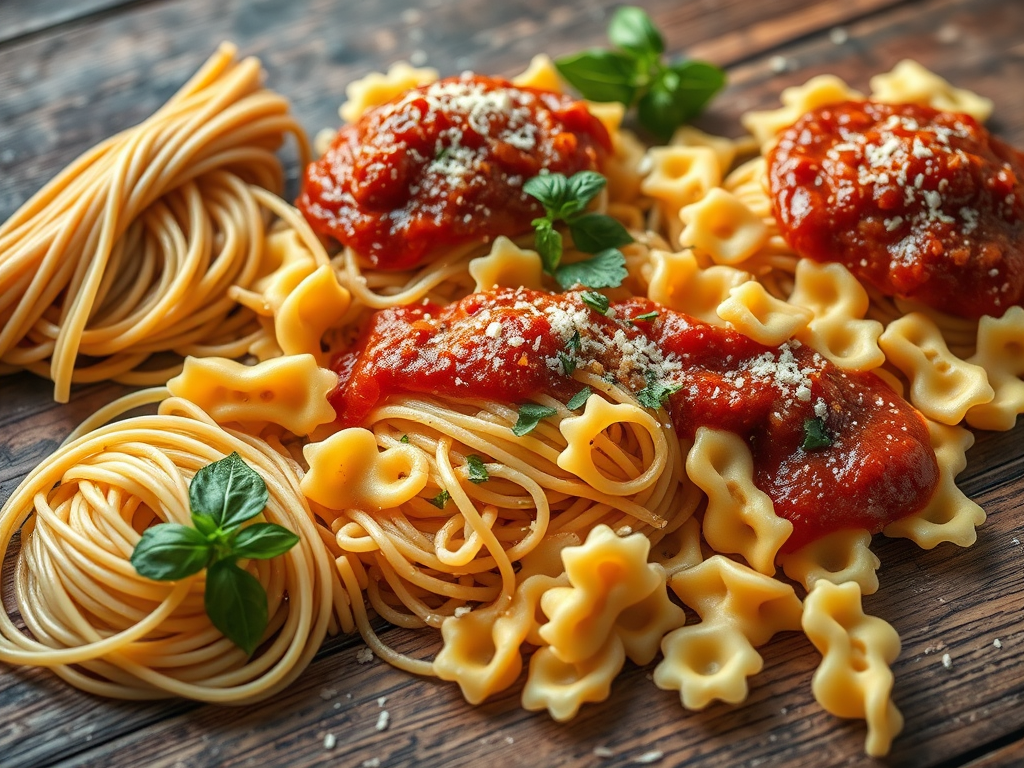
National Pasta Day: A Love Letter to the Carbs That Never Let Us Down
October 17th is National Pasta Day, and honestly, pasta deserves way more than just one day.
Let’s be real: pasta is the ultimate comfort food, the reliable friend, the “I don’t know what to make for dinner” savior, and the reason Italy has been winning at life for centuries. It’s carbs, it’s versatile, it’s delicious, and it doesn’t judge you for eating it three nights in a row.
So grab your forks (twirl, don’t cut – we’ll get to that), and let’s celebrate the noodle in all its glorious forms.
Pasta: The Food That Literally Changed History
You think pasta is just food? Think again. This is cultural currency.
The Marco Polo myth: Everyone says Marco Polo brought pasta back from China to Italy in the 13th century. Plot twist – that’s basically fake news. Italians were already eating pasta before Marco Polo was even born. There’s evidence of pasta-making in Italy dating back to the 4th century BCE. The man did a lot of traveling, but he didn’t invent spaghetti night.
The real story: Pasta likely evolved independently in multiple places. The Chinese had noodles. The Italians had pasta. Both cultures looked at wheat and water and said, “Let’s make something amazing.” Great minds think alike, apparently.
Why it matters: Pasta was revolutionary because it could be dried and stored for months, even years. Before refrigeration, this was HUGE. It meant people could survive winters, sailors could eat on long voyages, and families had reliable food security. Pasta literally helped civilization expand.
That penne in your pantry right now? It’s part of thousands of years of human innovation. Respect.
The Pasta Shape Conspiracy: Why There Are 600+ Types
Here’s something wild: Italy has over 600 documented pasta shapes. Six. Hundred.
Why so many? Because Italians take this seriously, and different shapes aren’t just aesthetic – they’re functional.
The method to the madness:
Long and thin (spaghetti, linguine, angel hair): Perfect for light, oily, or smooth sauces that coat each strand. Think aglio e olio, carbonara, or simple tomato sauce. The sauce clings without overwhelming.
Tubes (penne, rigatoni, ziti): The ridges and hollow centers trap chunky sauces. That thick meat sauce? Bolognese? Vodka sauce? It gets inside the tube and in the grooves. Every bite is flavor-packed.
Shaped pasta (farfalle, orecchiette, shells): These little pockets and curves catch ingredients. Farfalle (bow ties) hold creamy sauces in their folds. Orecchiette (little ears) are perfect for vegetables and pesto. Shells become tiny bowls for cheese and sauce.
Tiny pasta (orzo, ditalini, acini de pepe): Made for soups and salads where you need pasta that plays well with other ingredients without taking over.
The rule: The heavier and chunkier the sauce, the more substantial the pasta shape should be. It’s not random – it’s science disguised as carbs.
Pasta Crimes That Need to Stop (According to Italians)
Italians have opinions about pasta. Break these rules at your own risk:
Crime #1: Breaking spaghetti before cooking Why are you doing this? The pot is big enough. Just let it soften and push it down. Breaking spaghetti is like cutting the Mona Lisa in half because it doesn’t fit your frame.
Crime #2: Rinsing pasta after cooking No. Stop. The starch coating helps sauce stick. Rinsing washes away that magical sticky layer. The only exception: if you’re making pasta salad.
Crime #3: Pouring sauce on top instead of mixing it This isn’t a sundae. You’re supposed to toss the pasta IN the sauce so every piece gets coated. That’s how flavor works.
Crime #4: Cutting pasta with a knife Twirl it. Use your fork. Be patient. Cutting pasta with a knife is apparently what nightmares are made of in Italy.
Crime #5: Putting chicken in pasta Italians don’t do chicken pasta. They’ll do chicken as a separate course, but chicken alfredo? Not a thing in Italy. That’s an American invention, and Italians have thoughts about it (mostly confusion).
The twist: Here’s the thing though – if you’re not in Italy and you enjoy your pasta your way? Do you. Food is meant to be enjoyed. Just maybe don’t do it in front of an Italian grandmother.
The Cult of Carbonara: Let’s Settle This
Carbonara is having a moment (okay, it’s been having a moment for decades), and people are passionate about it.
The authentic recipe has exactly 5 ingredients:
- Guanciale (cured pork cheek – NOT bacon, the Italians will find you)
- Eggs (just the yolks for some, whole eggs for others – this debate rages on)
- Pecorino Romano cheese (NOT Parmesan, though some mix both)
- Black pepper (lots of it)
- Pasta (traditionally spaghetti or rigatoni)
That’s it. No cream. No garlic. No peas. No chicken.
How it actually works: The heat from the pasta cooks the eggs into a silky, creamy sauce without scrambling them. It’s technique, timing, and temperature. When done right, it’s transcendent. When done wrong, you’ve made scrambled eggs with pasta.
The American version usually has cream, sometimes bacon, occasionally random vegetables. Is it carbonara? Technically no. Is it delicious? Often yes. Is this okay? Depends on who you ask and how much you value online arguments.
Instant Ramen: The Underdog That Deserves Recognition
Let’s talk about the pasta (yes, it counts) that got many of us through college, late nights, and tight budgets: instant ramen.
Fun facts you didn’t know:
- Instant ramen was invented in 1958 by Momofuku Ando in Japan
- It was literally designed to be affordable, convenient, and filling
- There’s an entire museum dedicated to it in Yokohama, Japan
- It went to space in 2005 (Space Ram – specially designed for zero gravity)
The glow-up: Instant ramen has evolved. People are treating it like a base ingredient and going wild:
- Add an egg (poached, soft-boiled, or beaten into the broth)
- Throw in actual vegetables (spinach, bok choy, mushrooms, corn)
- Upgrade the protein (leftover chicken, tofu, shrimp)
- Add sesame oil, sriracha, or chili crisp for flavor depth
- Top with green onions, nori, or sesame seeds
Suddenly your $0.50 packet of noodles is a legit meal. That’s the power of pasta.
How to Celebrate National Pasta Day (Beyond Just Eating Pasta)
Level 1: The Easy Celebration Make your favorite pasta dish. That’s it. Spaghetti and jarred sauce? Valid. Boxed mac and cheese? Also valid. Enjoy your carbs judgment-free.
Level 2: Try a New Shape Go to the store and buy a pasta shape you’ve never tried. Make it. See how it changes your sauce game. Orecchiette might become your new obsession.
Level 3: Make Fresh Pasta It’s easier than you think. Flour, eggs, salt, and some elbow grease. You don’t need a fancy machine (though they help). Rolling pin works fine. Fresh pasta cooks in like 2-3 minutes and tastes unreal.
Level 4: The Restaurant Experience Support your local Italian spot. Try something you can’t pronounce. Ask the server what’s good. Live a little.
Level 5: Pasta Party Host a “build your own pasta bowl” night. Make 2-3 types of pasta, set out different sauces, proteins, and toppings. Let everyone customize. It’s like Chipotle but pasta. And way more fun.
Pasta Hacks That Will Change Your Life
The pasta water trick: Save a cup of that starchy pasta water before draining. Add it to your sauce. It helps the sauce stick to the pasta and creates a silky texture. This is the secret restaurants don’t want you to know (except they do, and chefs talk about it constantly).
The one-pot pasta method: Cook pasta directly in the sauce with added liquid. Everything finishes together, the pasta absorbs flavor, and you only dirty one pot. Game-changer for weeknight dinners.
The cold water start: Put pasta and cold water in a pot together, then turn on the heat. It uses less water, reduces cooking time slightly, and the extra starch in the concentrated water is great for sauce. Science is wild.
The olive oil debate: Don’t add olive oil to your pasta water. It prevents sauce from sticking. Save the olive oil for drizzling on top at the end.
The al dente rule: Cook pasta 1-2 minutes less than the package says. It should have a slight bite in the center. It’ll finish cooking when you toss it with hot sauce, and you won’t end up with mush.
The Weirdest Pasta Dishes That Actually Exist
Cacio e Pepe: Cheese. Pepper. Pasta water. That’s the entire dish. Sounds basic, but it’s notoriously difficult to make correctly. The cheese can clump, the sauce can break, and Italian grandmas judge you harshly.
Pasta alla Gricia: Basically carbonara without eggs. Guanciale, pecorino, pasta, pepper. Proof that sometimes less is more.
Spaghetti all’Assassina: “Assassin’s spaghetti” from Bari, Italy. The pasta is cooked directly in tomato sauce in a screaming hot pan until the bottom burns and gets crispy. It’s intentionally charred. It sounds wrong but tastes incredible.
Pasta with Candies: In Calabria, Italy, there’s a traditional Christmas dish called “Pasta e Noci” made with pasta, walnuts, breadcrumbs, and… honey and cinnamon. Sweet pasta is apparently a thing.
Swedish Spaghetti: In Sweden, they sometimes serve spaghetti with ketchup and cut-up hot dogs. Italians everywhere just felt a disturbance in the force.
The Bottom Line
Pasta is universal. It crosses cultures, budgets, skill levels, and dietary preferences (gluten-free, chickpea, lentil, zucchini – there’s pasta for everyone now). It’s comfort in a bowl, dinner in under 20 minutes, and proof that sometimes the simplest things are the most satisfying.
So on October 17th – and honestly, any day ending in “y” – celebrate the noodle. Cook it, twirl it, sauce it, love it.
Life is uncertain. Pasta is forever.
Now go forth and carb-load with pride. 🍝
What’s your go-to pasta dish? Are you team red sauce, white sauce, or oil-based? And most importantly: do you break your spaghetti before cooking? (Be honest, this is a safe space… mostly.) Drop your pasta confessions below.

 Salt + Cedar Collective