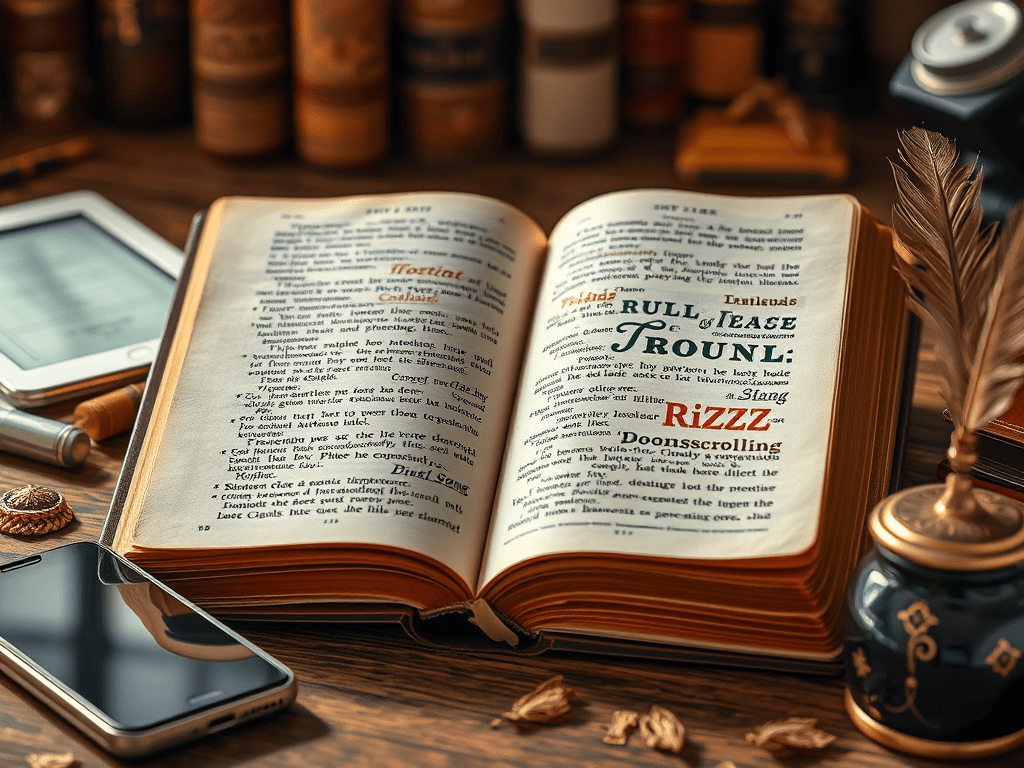
National Dictionary Day: Why October 16th Is Low-Key the Most Underrated Holiday
Spoiler alert: This isn’t your English teacher’s lecture about looking up words. This is about the absolute chaos, brilliance, and drama hiding in your dictionary app.
October 16th is National Dictionary Day, celebrating the birthday of Noah Webster – the guy who literally created the American dictionary in 1828. But here’s the plot twist: dictionaries are actually wild, constantly evolving, surprisingly controversial, and kind of… rebellious?
Yeah, you read that right. Let’s dive in.
The OG Dictionary Flex: Noah Webster Was a Savage
Noah Webster wasn’t just some bookish dude who liked words. He was on a mission to make American English its own thing, separate from British English. This man woke up and chose linguistic violence.
His boldest moves:
- Changed “colour” to “color” (take that, Britain)
- Switched “centre” to “center”
- Made “gaol” into “jail” (because seriously, who was pronouncing that first one correctly?)
- Spent 27 YEARS writing his dictionary
Imagine spending nearly three decades on one project. That’s dedication, obsession, or both. Webster was basically saying, “We fought a war for independence, now let’s make our spelling independent too.” Absolute legend behavior.
Words That Didn’t Exist When You Were Born
Here’s something that’ll blow your mind: dictionaries add new words constantly. Language is alive, evolving, and reflecting how we actually communicate.
Recent additions that prove dictionaries are cooler than you think:
“Rizz” (2023) – Yeah, your slang made it to the official dictionary. Merriam-Webster added it, defining it as “romantic appeal or charm.” Your great-grandparents’ dictionary didn’t have this. You’re living in historic linguistic times.
“Doomscrolling” (2020) – The act of endlessly scrolling through bad news. We all do it, and now it’s official enough for the dictionary. That’s how fast language adapts to our behavior.
“Stan” (2017) – From an Eminem song to official dictionary status. When you stan something now, you’re using a verified English word.
“Facepalm” (2017) – A gesture became a word. That’s the power of internet culture.
“FOMO” (2016) – Fear of missing out went from text slang to legitimate dictionary entry in less than a decade.
The dictionary isn’t some dusty authority telling you how to speak – it’s actually listening to how YOU speak and adapting.
The Dictionary Wars Are Real (And Petty)
You think there’s one agreed-upon dictionary? Oh, sweet summer child. Oxford, Merriam-Webster, Cambridge, Collins – they’re all competing for word supremacy, and the drama is chef’s kiss.
Case study: The Great Emoji Debate
Oxford Dictionary’s 2015 Word of the Year wasn’t even a word – it was 😂 (Face with Tears of Joy emoji). The internet had a MELTDOWN. Linguists argued. Twitter exploded. People wrote think pieces. All because a dictionary made an emoji official.
The “irregardless” controversy:
Merriam-Webster added “irregardless” to the dictionary, and English teachers everywhere felt personally attacked. The entry literally says it’s “nonstandard” – basically dictionary shade for “people say this, but we’re judging them.” That’s the level of pettiness we’re dealing with.
Words That Sound Fake But Are 100% Real
Pop quiz: Which of these are actual dictionary words?
- Defenestration – The act of throwing someone out a window (yes, this happened enough historically to need its own word)
- Petrichor – The smell of earth after rain (finally, a word for that!)
- Aglet – The plastic tip on your shoelace (your life just changed)
- Snollygoster – A politician who acts purely out of self-interest (still relevant, apparently)
- Callipygian – Having well-shaped buttocks (the dictionary really said “nice butt” in the fanciest way possible)
All real. All in the dictionary. All proof that English is unhinged.
The Dictionary’s Dark Secret: Fake Words
Here’s where it gets spicy. Dictionaries have intentionally included fake words to catch plagiarizers.
The most famous: “Esquivalience”
The New Oxford American Dictionary planted this completely made-up word (supposedly meaning “the willful avoidance of one’s official responsibilities”) as a copyright trap. When dictionary.com copied it without permission, they got BUSTED. It’s like a linguistic sting operation.
Other dictionaries have done similar things – adding fake towns to maps, fictional words to catch copycats. Your dictionary might be gaslighting you with trap entries, and that’s honestly iconic.
Words the Dictionary Refuses to Define
Some words are too powerful, too chaotic, or too regional for official dictionary status… yet.
Words still fighting for legitimacy:
- “Hangry” – Oh wait, Merriam-Webster actually added this in 2018. Never mind, being angry because you’re hungry is now official.
- “Yeet” – Some dictionaries have it, some don’t. The battle continues.
- “Bussin” – Still waiting on official status, but give it time.
The lag between when slang emerges and when it becomes “official” is getting shorter, though. Dictionaries are sprinting to keep up with internet speed communication.
How to Celebrate National Dictionary Day (Without Being Boring)
Level 1: Casual Observer
- Look up the etymology (origin story) of your name. Some of these histories are insane.
- Find the weirdest word you can and use it in conversation today. Bonus points if no one calls you out.
Level 2: Word Enthusiast
- Start a group chat where everyone has to use one obscure dictionary word per day
- Check out what new words were added this year – it’s like a time capsule of culture
- Play dictionary-based games: Balderdash, Scrabble, or even just trying to stump friends with definitions
Level 3: Linguistic Chaos Agent
- Try to get your friend group’s inside joke added to Urban Dictionary (gateway to real dictionaries)
- Learn a word in another language that has no English equivalent (schadenfreude, hygge, etc.)
- Read the dictionary’s “words we’re watching” list – these are words on the verge of official status
Why This Actually Matters
Look, I get it – celebrating a dictionary sounds about as exciting as watching paint dry while reading tax forms. But here’s the real deal:
Language is power. The words available to you shape how you think, how you express yourself, and how you understand the world. Every time a new word gets added, it’s because humans needed a way to describe something that didn’t have a name before. That’s creation. That’s evolution happening in real-time.
Dictionaries document how we communicate, what we value, and how culture shifts. When “they” became an officially accepted singular pronoun, that wasn’t just a grammar update – it was recognition of how people actually identify and exist in the world.
When mental health terms like “gaslighting” entered mainstream dictionaries, it gave people language to describe their experiences. Words validate reality.
The Bottom Line
Noah Webster spent 27 years creating a dictionary because he believed Americans deserved their own linguistic identity. Nearly 200 years later, dictionaries are still evolving, still causing drama, still reflecting who we are as a society.
So on October 16th, pour one out for Noah Webster, appreciate that your texting slang might be tomorrow’s official English, and maybe – just maybe – look up a word you’ve been pretending to understand for years.
Language is alive. Dictionaries are receipts. And you’re part of the story being written right now.
Now if you’ll excuse me, I need to go use “defenestration” in a sentence at least three times today.
What’s your favorite word? The weirdest word you know? Drop it in the comments. Let’s see who can out-obscure each other.

 Salt + Cedar Collective