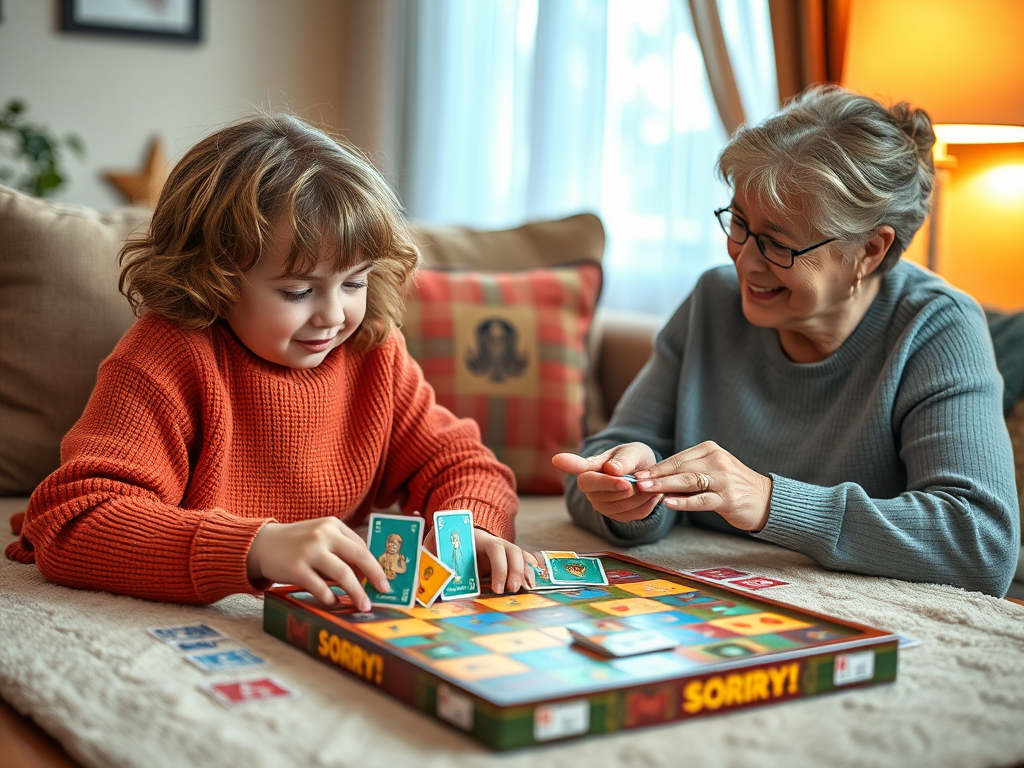
Board games can be powerful therapeutic tools, and Sorry! offers unique opportunities for emotional learning with young clients. This classic game naturally creates situations that mirror real-life challenges children face.
Why Sorry! Works in Therapy
The game’s core mechanics—being “bumped” back to start, drawing cards that determine your moves, and the satisfaction of reaching “home”—parallel many childhood experiences of setbacks, limited control, and eventual success. These parallels make it an excellent vehicle for processing emotions and building coping skills.
Therapeutic Applications
During gameplay, children naturally express frustration when sent back to start, joy when drawing a helpful card, or anxiety about being caught. As a therapist, these moments become opportunities to explore feelings, validate emotions, and practice regulation strategies. You might pause when a child shows distress to ask, “That feeling in your chest when you got bumped—where else do you feel that?”
The game also teaches valuable lessons about fairness, taking turns, and handling disappointment. When a child must send another player back, it opens discussions about empathy and considering others’ feelings.
Practical Tips
Keep sessions relaxed and follow the child’s lead. Some sessions might focus entirely on gameplay and building rapport, while others naturally evolve into deeper conversations. The key is creating a safe space where emotions can emerge and be explored without pressure.
Sorry! transforms therapy from “talking about feelings” into “experiencing and processing feelings together”—making it an invaluable tool for any child therapist’s toolkit.
Add this game to your collection!

 Salt + Cedar Collective