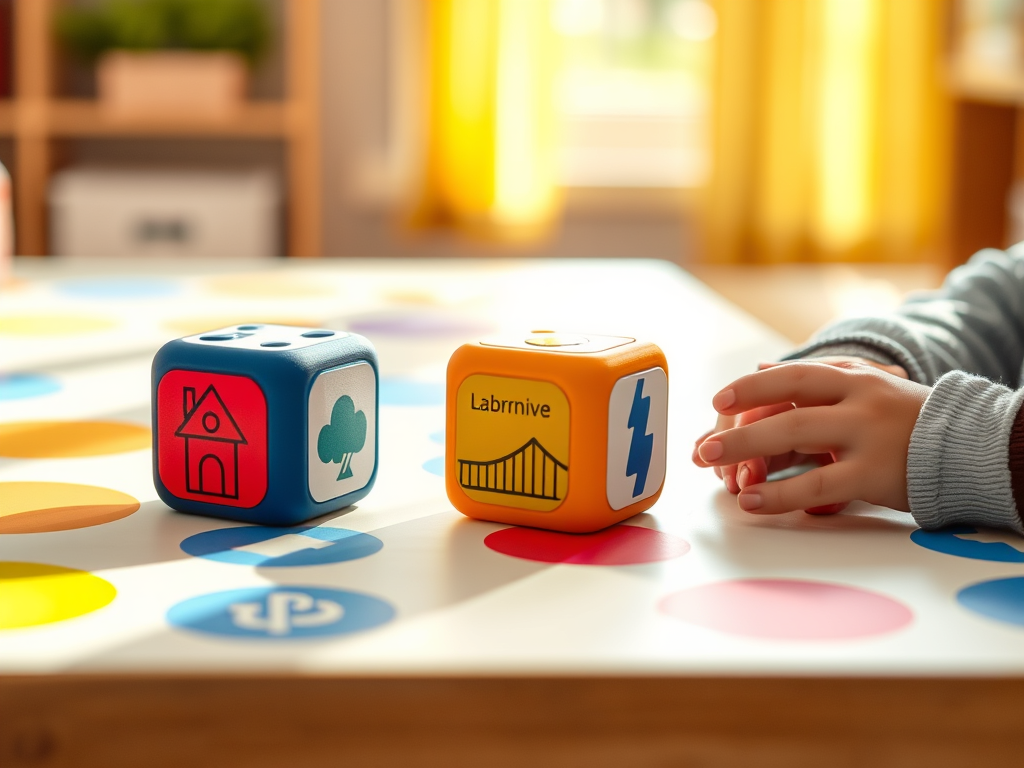
In my practice working with children and adolescents, I’ve learned that direct questioning—”How are you feeling?” or “What happened at school?”—often leads to shrugs, one-word answers, or the dreaded “I don’t know.” Children’s inner worlds are rich and complex, but accessing them requires creativity and patience. This is where Rory’s Story Cubes have become one of my most valued therapeutic tools.
The Magic of Indirect Communication
Story cubes work because they remove the pressure of direct self-disclosure. When a child rolls the dice and sees symbols like a house, a storm cloud, and a bridge, they’re not being asked to analyze their emotions or justify their behavior. Instead, they’re invited into the natural realm of childhood: storytelling and imagination.
Through these seemingly simple stories, children often reveal profound truths about their experiences. A tale about a lost animal might reflect feelings of abandonment after their parents’ divorce. A story featuring a character who discovers hidden treasure could express their longing for recognition or their sense of having secret strengths others don’t see.
Creativity as a Pathway to Healing
Children are naturally creative beings, but trauma, anxiety, and depression can dampen this innate ability. Story cubes reignite creative thinking by providing just enough structure to feel safe while leaving infinite possibilities for imagination. This creative engagement itself can be therapeutic, helping children access problem-solving skills and emotional flexibility.
When a child creates a story where the main character overcomes obstacles using clever solutions, they’re not just entertaining themselves—they’re practicing resilience thinking. They’re exploring different ways challenges can be approached and resolved, often discovering resources within themselves they didn’t know existed.
Building Communication Skills Naturally
Many children struggle with narrative skills—organizing thoughts sequentially, connecting cause and effect, or expressing emotions through language. Story cubes provide gentle practice in all these areas. As children weave tales connecting seemingly random images, they strengthen their ability to create coherence from complexity, a skill that serves them well beyond the therapy room.
Parents often report that children who regularly engage with story cubes become more articulate about their own experiences. The practice of constructing narratives with beginning, middle, and end helps them organize their thoughts about real-life situations more effectively.
Revealing What Matters Most
Perhaps most valuably, story cubes help children communicate what’s truly important to them without the vulnerability of direct admission. A child who consistently creates stories about friendship and loyalty might be telling you about their social struggles. One whose characters frequently face choices between safety and adventure could be processing their own relationship with risk and independence.
These patterns emerge naturally over multiple sessions, providing insights that direct questioning might never uncover. Children feel safe exploring difficult themes through the protective distance of fictional characters, often working through complex emotions without realizing they’re doing therapeutic work.
Family Connection Beyond Therapy
Story cubes aren’t just therapeutic tools—they’re wonderful bridges between parents and children at home. When families play together, parents gain insight into their child’s thought patterns, concerns, and creative strengths. Children feel heard and valued for their imagination rather than evaluated for their behavior or performance.
These shared storytelling moments create positive associations with communication and vulnerability, making it more likely that children will continue sharing their inner worlds as they grow.
Age and Adaptability
While Rory’s Story Cubes work beautifully with elementary-age children, I’ve successfully adapted them for preschoolers (who might tell shorter, simpler stories) and teenagers (who often appreciate the creative challenge and metaphorical possibilities). The key is meeting each child where they are developmentally and following their lead in terms of story complexity and emotional depth.
A Gentle Revolution
In a world where children are often overscheduled and overwhelmed, story cubes offer something precious: unhurried time to imagine, create, and be heard. They remind us that sometimes the most direct path to understanding a child’s heart is through the winding roads of their imagination.
For parents, teachers, and therapists seeking to connect more meaningfully with the children in their lives, these simple dice offer a profound invitation—to step into a child’s world and discover the wisdom, creativity, and resilience that live there, waiting to be witnessed and celebrated.
Definitely a must have when working with kiddos and teens!

 Salt + Cedar Collective